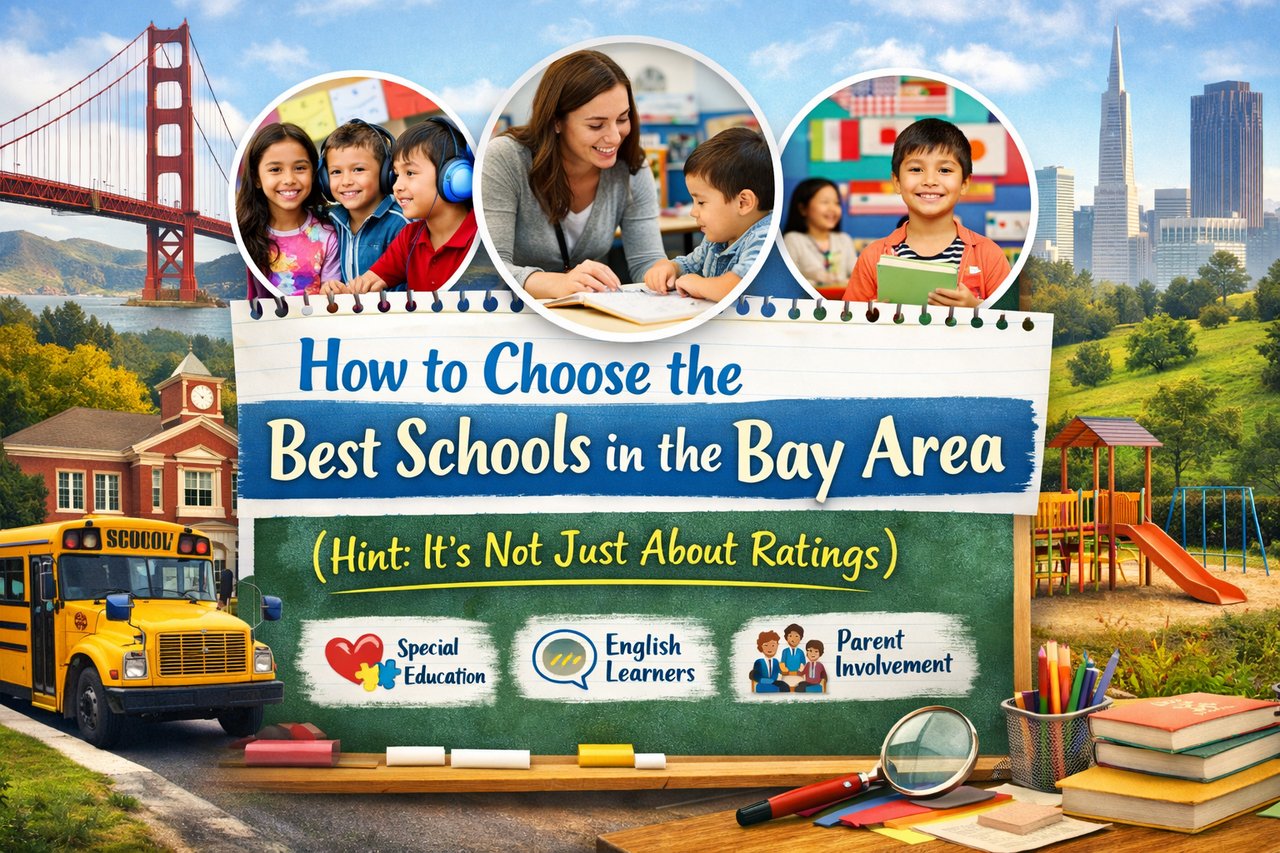
Picking the Best Schools in the Bay Area Without Falling for Ratings Only
For many Bay Area homebuyers, school ratings are one of the first things they look at when deciding where to live.
You’ve probably seen those popular school score websites that rate schools on a scale from 1 to 10. While those tools can be helpful, relying on them alone can lead families to overlook neighborhoods that might actually be a great fit.
Choosing the right school environment often requires looking beyond a single number and understanding what really matters for your family.
If you are currently exploring neighborhoods in West Contra Costa County or the East Bay, this guide can help you think about schools in a more balanced way.
Why School Ratings Don’t Tell the Full Story
School rating platforms often use test scores, college readiness metrics, and demographic data to create a ranking system. Many of these sites evaluate factors like graduation rates, teacher quality, and standardized test performance.
Those metrics can be useful, but they only tell part of the story.
A school with a slightly lower rating might still have:
• excellent teachers
• strong community involvement
• smaller class sizes
• supportive programs for students
Families sometimes discover that a school rated “7” is actually a much better fit for their child than a school rated “10”.
Schools and Real Estate in the Bay Area
In the Bay Area, school reputation can strongly influence home values and buyer demand.
Neighborhoods associated with highly ranked school districts often see higher property prices because many families compete for those areas.
However, this doesn’t mean other neighborhoods lack quality schools or strong communities.
For example, buyers searching in Richmond, El Sobrante, Pinole, or Hercules often discover schools that work very well for their children even if those schools are not always at the top of national ranking lists.
Understanding these differences can help buyers make smarter decisions about where to live.
You can also explore how inventory and buyer behavior are shifting across the region in our 2026 Bay Area Housing Market Update.
What Families Should Look At Beyond School Ratings
Instead of focusing only on a numerical score, consider a broader picture when evaluating schools.
School Culture
Visit campuses if possible. Talk to teachers, administrators, and other parents. The culture of a school can make a huge difference in how a student feels and performs.
Programs and Opportunities
Some schools offer strong programs in areas like:
• arts
• STEM
• athletics
• language immersion
• college preparation
These programs can be more important than a simple ranking.
Class Size and Teacher Support
Smaller class sizes and engaged teachers often create stronger learning environments.
A supportive school community can be more meaningful for many families than a slightly higher test score average.
Commute and Daily Lifestyle
Sometimes families focus so heavily on rankings that they overlook daily lifestyle factors like commute times and after-school activities.
Living closer to work, parks, and community amenities can dramatically improve quality of life.
How This Applies to East Bay Communities
Many buyers working in San Francisco, Oakland, or Berkeley explore communities in West Contra Costa because they offer a balance between lifestyle and housing affordability.
Neighborhoods like:
• East Richmond Heights
• Richmond Annex
• El Sobrante
• Pinole
all attract families who want access to East Bay amenities while still maintaining a quieter residential environment.
Each neighborhood has different school options and community dynamics, which is why researching beyond ratings is so important.
Frequently Asked Questions About Schools and Home Buying
Do school ratings affect home values?
Yes. Homes located near highly ranked schools often see stronger demand and higher prices because families compete for those areas.
Are lower-rated schools always worse?
Not necessarily. School ratings often reflect standardized test scores and demographic factors rather than the full educational experience.
How do Bay Area families choose schools?
Many families look at a combination of factors including teacher quality, extracurricular programs, school culture, and commute convenience.
Should I buy a home only based on school ratings?
School ratings are one data point, but they should not be the only factor when choosing a neighborhood.
What if I do not have children?
School districts can still influence resale value and long-term property appreciation, even for buyers without children.
Final Thoughts
School rankings can be a useful starting point, but they should never be the only factor when choosing where to live.
In the Bay Area, many great communities offer strong schools, supportive neighborhoods, and a high quality of life even if they are not always at the top of online rankings.
Looking at the bigger picture often leads families to neighborhoods that better match their lifestyle and long-term goals.
Thinking About Moving to the East Bay?
If you are exploring neighborhoods in Richmond, El Sobrante, Pinole, Hercules, or anywhere in West Contra Costa County, I would be happy to help you navigate the local market.
LaDonna Azagra
DRE 01899394 | The Azagra Group x Compass
📞 510-725-8885
📧 [email protected]
🌐 www.theazagragroup.com